How Seed Oils, Excess Dietary Fat, and the Randle Cycle Interfere With Our Natural Carbohydrate Metabolism
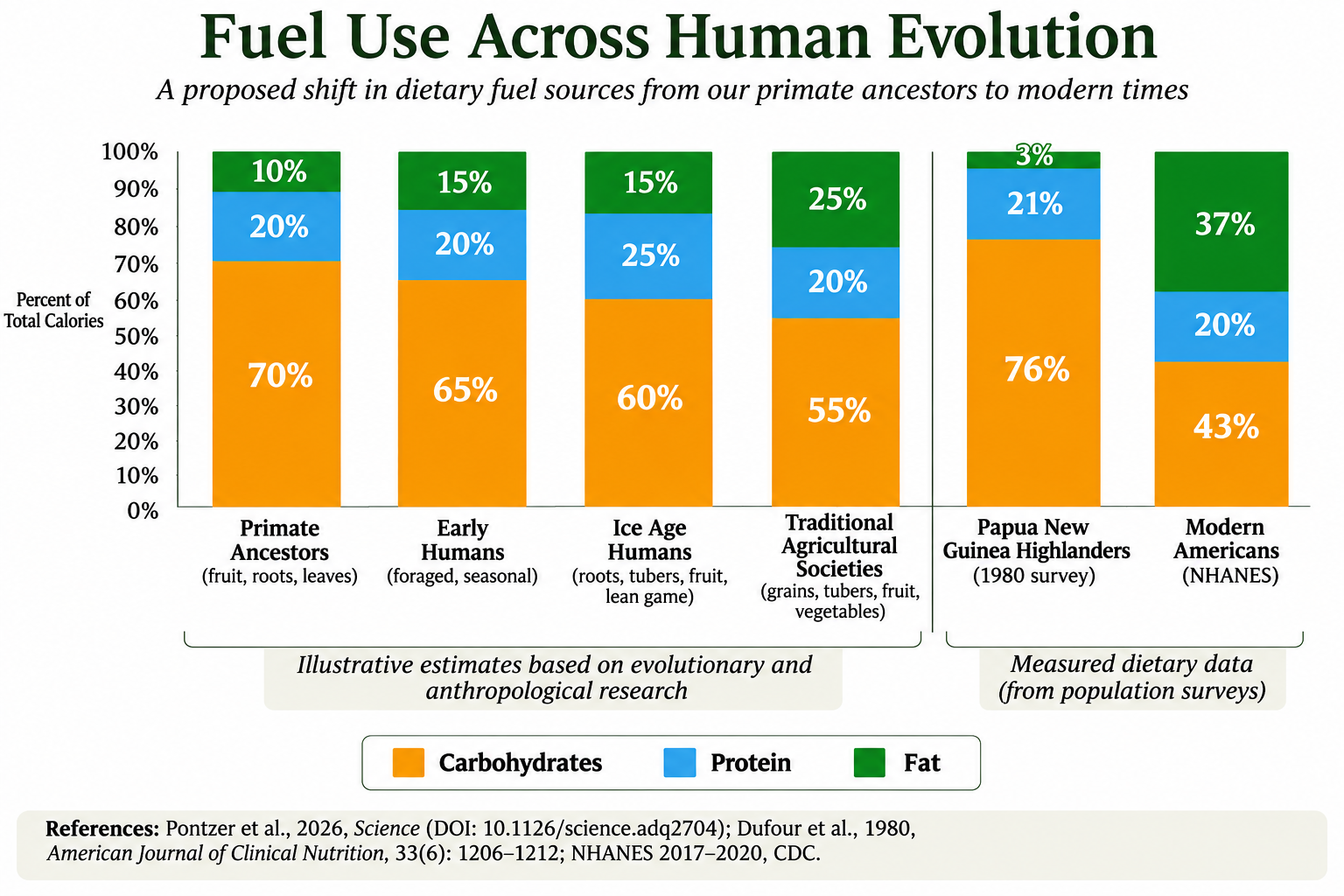
Americans now consume nearly 40% of their calories from fat. According to federal nutrition data, the average was 36.8% in 2021–2023, a remarkable amount of dietary fat compared with many of the carbohydrate-rich traditional diets studied around the world. Yet carbohydrates continue to take most of the blame for obesity, insulin resistance, and declining metabolic health. We're told to avoid potatoes, fruit, juice, and sugar while butter, oils, cheese, nuts, and fatty meats are celebrated as healthy sources of energy.
I believe we've gotten this almost completely backward. Humans have a long evolutionary relationship with carbohydrate-rich foods, and some of the healthiest traditional populations studied consumed very little fat. Meanwhile, modern Americans are eating unprecedented quantities of industrial seed oils alongside other concentrated fats. My concern isn't that carbohydrates are inherently damaging, but that we've created a metabolic environment in which the body increasingly struggles to use them properly.
Nutrition researcher Denise Minger popularized the term "Macronutrient Swampland" to describe diets that contain large amounts of both fat and carbohydrates. Think pizza, donuts, French fries, pastries, and ice cream. These foods contain plenty of carbohydrates, but they're also loaded with fat, often from industrial seed oils. I believe the real problem begins with the cellular damage caused by these oils, particularly their unstable polyunsaturated fats, which can oxidize and interfere with mitochondrial function and insulin signaling.
Once this damage has occurred, continuing to eat large amounts of fat makes it harder for the body to burn glucose efficiently. This happens through a normal metabolic process called the Randle cycle, which describes how fat and glucose compete to be used for energy inside our cells. When fatty acids are abundant, cells tend to burn more fat and less glucose, even when carbohydrates are available. In a metabolically damaged body, this competition can make it especially difficult to return to healthy carbohydrate metabolism. That's why my approach focuses on eliminating industrial seed oils, substantially reducing dietary fat, and restoring carbohydrates as the body's primary source of energy.
Our Evolutionary History Is Rich in Carbohydrates
Our primate ancestors consumed a wide variety of plant foods, including fruit, leaves, and other carbohydrate sources. As the human lineage developed, roots, tubers, and eventually cooked starches became increasingly important sources of energy. Our ancestors also sought out honey and other concentrated sources of natural sugar whenever they were available. These foods helped meet the enormous energy demands of survival, physical activity, and the developing human brain.
Research into human evolution supports the importance of dietary carbohydrates. Humans developed adaptations for starch digestion, including variation in the number of copies of the salivary amylase gene. Cooking also made starchy foods easier to digest, increasing the energy available from roots and tubers. Researchers have argued that these developments helped support the expanding energy requirements of the human brain, challenging the popular assumption that animal fat alone drove our evolution.
As humans migrated into colder environments, their diets naturally changed. During glacial periods, some populations relied more heavily on meat and animal fat because plant foods were less available. Large animals provided valuable energy in environments where obtaining enough carbohydrate could be difficult, demonstrating our remarkable ability to adapt to different food supplies.
But the ability to survive on fat doesn't mean it was the dominant dietary pattern throughout human history. Populations living in warmer climates continued relying on fruit, roots, tubers, and honey, while later agricultural societies built their diets around rice, potatoes, maize, wheat, and other starches. Human beings became extraordinarily good at obtaining and digesting carbohydrates, and those foods remained central to many traditional diets for thousands of years.
Traditional Diets Were Often Surprisingly Low in Fat
One of the most compelling examples comes from the highlands of Papua New Guinea, where researchers documented populations consuming enormous quantities of sweet potatoes. In some communities, sweet potatoes supplied most of the daily calories, supplemented by other plant foods and relatively small amounts of animal products. Certain traditional highland diets contained less than 10% of calories from fat, far below what Americans eat today.
Other traditional populations also relied heavily on carbohydrate-rich staples. The Kitavans consumed substantial amounts of tubers and fruit alongside coconut and fish, while many agricultural societies throughout Asia, Africa, and the Americas obtained much of their energy from grains and starchy plants. Their fat intakes varied, and coconut made the Kitavan diet considerably fattier than some highland diets, but these examples demonstrate how successfully humans can obtain energy from carbohydrates.
Even a diet containing 20% of calories from fat would be relatively low compared with the modern American average. At 2,000 calories, 20% fat provides about 44 grams daily, while 37% provides approximately 82 grams. That's nearly twice as much fat before accounting for differences in food quality, fatty acid composition, or total energy intake.
The Inuit represent an important exception because their Arctic environment required much greater dependence on animal foods. Their traditional diets varied by season, location, and available prey, with some communities obtaining substantial energy from animal fat. Their nutritional history also includes health challenges, and it’s possible that the increased dietary fat itself caused those problems. What their experience clearly demonstrates is human adaptability to an environment where carbohydrate-rich plants were often scarce.
The larger evolutionary picture is that humans have thrived on a wide variety of diets, including remarkably carbohydrate-rich, low-fat patterns. The idea that we need anything approaching 40% of our calories from fat is difficult to reconcile with the many traditional populations that lived on substantially less.
How Industrial Seed Oils Changed Our Food Supply
For most of human history, concentrated dietary fats required considerable effort to obtain. Animal fat depended on hunting success, species, and season, while plant oils required access to particular foods and methods of extraction. Modern industrial processing changed this relationship dramatically, making enormous quantities of concentrated vegetable oils inexpensive and widely available.
Soybean, corn, cottonseed, sunflower, and similar oils are now found throughout the food supply. They're used in restaurant cooking, fried foods, dressings, sauces, baked goods, and packaged snacks, often contributing substantial amounts of fat without people realizing it. Their widespread use has also increased our exposure to omega-6 polyunsaturated fatty acids, particularly linoleic acid.
Polyunsaturated fatty acids contain multiple double bonds, making them more vulnerable to oxidation. When these fats undergo lipid peroxidation, they can generate reactive compounds such as 4-hydroxynonenal and other aldehydes. Experimental research has demonstrated that these products can interfere with mitochondrial function, damage cellular structures, and disrupt pathways involved in inflammation and insulin signaling.
This is where my understanding of insulin resistance begins. I consider chronic exposure to industrial seed oils and their oxidation products a major potential driver of the metabolic damage that precedes impaired glucose regulation. The mechanisms involving lipid peroxidation, mitochondrial dysfunction, and disrupted insulin signaling are well worth investigating, even though the claim that seed oils are the primary cause of human insulin resistance has not been established by clinical research.
The important point is that insulin resistance involves more than the presence of glucose in the bloodstream. It reflects problems with how cells respond to insulin, manage energy, and regulate fuel use. I believe the modern increase in industrial seed-oil consumption deserves far more attention in that conversation than it currently receives.
The Randle Cycle: Why Excess Fat Makes Glucose Harder to Burn
Once metabolism has been compromised, the amount of dietary fat someone continues eating becomes particularly important. This is where the Randle cycle helps explain what happens when fatty acids and glucose compete for oxidation inside our cells. Originally described in 1963, the glucose–fatty acid cycle demonstrates how increased fatty acid oxidation can suppress glucose oxidation through changes in mitochondrial enzyme activity.
When fatty acids are abundant and being oxidized, the resulting metabolic signals can inhibit pyruvate dehydrogenase, an enzyme complex responsible for directing glucose-derived pyruvate into mitochondrial energy production. The cell shifts toward burning more fat and less glucose. This is a normal physiological mechanism that allows the body to adapt to different fuel supplies, particularly during fasting or periods of limited carbohydrate availability.
But consider what happens when someone already has impaired insulin signaling, abnormal fatty acid regulation, or reduced metabolic flexibility. Continuing to supply large amounts of dietary fat can favor fatty acid oxidation and make the transition back toward glucose oxidation more difficult. The body may have plenty of carbohydrate available while struggling to use it efficiently.
This is the metabolic problem I want to address. Seed-oil-related cellular damage is the upstream concern in my framework, while the Randle cycle helps explain why excessive fat availability can interfere with carbohydrate oxidation afterward. Reducing dietary fat creates an opportunity to shift fuel use toward glucose, particularly when adequate carbohydrate and total energy are restored.
Why Modern Swampland Is So Different
Denise Minger's Swampland concept helps illustrate how far modern eating patterns have moved from many traditional diets. Americans routinely consume meals containing substantial quantities of fat and carbohydrate, often without realizing how much of the meal's energy comes from added oils, butter, cream, cheese, or other concentrated fats.
Think about a baked potato compared with French fries. The potato itself is naturally rich in starch and contains almost no fat, but frying it in oil changes its macronutrient composition dramatically. Bread is primarily carbohydrate, while pastries and donuts contain substantial amounts of added fat. Pizza combines a carbohydrate-rich crust with cheese, fatty meats, and often additional oil.
I don't consider the carbohydrate portion of these foods the fundamental problem. Glucose is a normal human fuel, and our bodies have sophisticated systems for digesting, absorbing, storing, and oxidizing it. My concern is the extraordinary amount of fat that accompanies these foods, especially industrial seed oils, in people whose ability to regulate glucose metabolism may already be compromised.
A person can eliminate sugar and starch while continuing to consume large amounts of dietary fat, but that doesn't necessarily address the underlying metabolic environment. In fact, prolonged carbohydrate restriction may further reduce the body's reliance on glucose oxidation. This is why I believe a genuinely lower-fat, carbohydrate-rich diet deserves consideration rather than another attempt to avoid carbohydrates indefinitely.
The Thyroid Connection: Why Carbohydrate Availability Matters
Thyroid hormones influence energy expenditure, mitochondrial activity, body temperature, and the way cells use carbohydrates and fats. Adequate energy availability is important for maintaining normal thyroid function, and prolonged under-eating can produce adaptive changes in thyroid hormone metabolism. Carbohydrate restriction can also reduce circulating T3, particularly when combined with insufficient calorie intake.
I frequently work with people who have spent years following ketogenic or carnivore diets and now struggle with fatigue, constipation, cold hands and feet, poor sleep, and stubborn body fat. Some have low circulating T3, while others have laboratory results within conventional reference ranges despite persistent symptoms. I look at their complete nutritional intake, thyroid testing, energy availability, and other possible contributors rather than assuming their symptoms come from one cause.
One of the most common patterns I see is inadequate carbohydrate intake combined with excessive dietary fat. People may be eating plenty of meat, cheese, butter, and eggs but surprisingly little carbohydrate or total energy. When we begin restoring carbohydrates and reducing fat, the goal is to provide enough fuel to support normal energy production rather than continuing to rely heavily on fatty acid oxidation.
Carbohydrate-rich foods also make it easier to replenish glycogen, support physical activity, and provide energy without requiring large amounts of added fat. For someone who has been under-fueled for years, these changes can be an important part of rebuilding strength, improving exercise tolerance, and supporting overall metabolic health.
Escaping Swampland With a High-Carbohydrate, Lower-Fat Diet
My approach begins by restoring adequate nourishment. I evaluate lean body mass, activity level, current calorie intake, thyroid function, digestion, and the person's history of restrictive dieting. Many clients need more total energy before we even consider changing their body composition, and carbohydrates provide an efficient way to increase energy availability without adding large amounts of fat.
For suitable clients, I sometimes begin with approximately 0.5 grams of dietary fat per kilogram of lean body mass. Once they're doing well, I generally work toward approximately 0.8 grams per kilogram of lean body mass as a maintenance starting point. These are individualized clinical targets, not universal dietary requirements, and I pay attention to essential fatty acids, fat-soluble vitamins, nutritional status, and tolerance throughout the process.
For a woman with 105 pounds of lean body mass, or approximately 48 kilograms, that would mean around 24 grams of fat during a lower-fat phase and 38 grams at maintenance. Compared with a typical American diet, this is a substantial reduction. It also creates much more room for carbohydrate-rich foods without automatically pushing total calorie intake beyond the person's needs.
I encourage clients to obtain carbohydrates from foods such as fruit, juice, potatoes, sweet potatoes, honey, maple syrup, milk, and well-tolerated starches. Protein comes from foods such as lean beef, seafood, low-fat dairy, and other appropriate sources, with the amount based primarily on lean body mass. The goal is to eat enough, distribute food throughout the day, and gradually restore confidence in carbohydrate-rich eating.
For someone coming out of years of carbohydrate restriction, I often increase carbohydrates gradually according to digestive tolerance and metabolic response. Glycogen and fluid balance change as carbohydrates return, and some people need time to adjust to larger amounts of starch or fruit. This is particularly important when chronic constipation, bloating, or other digestive problems are present.
Returning to Our Carbohydrate-Rich Roots
Human beings have spent millions of years adapting to changing food environments, but carbohydrate-rich foods have remained an important part of our nutritional history. Fruit, roots, tubers, honey, and eventually grains provided energy for countless generations, and some traditional populations maintained very low dietary fat intakes compared with modern Americans. Our ability to survive on animal fat during periods of scarcity doesn't mean that high-fat eating should define our everyday nutrition.
Today, the average American consumes nearly 40% of calories from fat, with industrial seed oils contributing to a food supply unlike anything available to our ancestors. I believe the resulting changes in fatty acid exposure, lipid oxidation, and cellular metabolism are central to understanding why so many people struggle with insulin resistance and poor glucose regulation. Once metabolic function has been compromised, continuing to consume large amounts of dietary fat can make efficient glucose oxidation more difficult.
My goal is to help people move away from that environment by minimizing industrial seed oils, reducing excessive dietary fat, and restoring carbohydrates as their primary energy source. Combined with adequate protein, sufficient calories, and attention to thyroid and digestive function, this approach offers a practical way to support metabolic recovery.
For people who have spent years fearing carbohydrates, the idea of eating more fruit, potatoes, juice, and sugar can feel completely backward. But that's exactly why I think this conversation matters. We have become so accustomed to blaming carbohydrates that we've largely overlooked the extraordinary amount of fat in the modern diet. It's time to reconsider which fuel we're asking the body to burn and whether the way we're eating is actually helping it thrive.
References
National Cancer Institute. Cancer Trends Progress Report: Fat Consumption. NHANES 2021–2023 data. https://progressreport.cancer.gov/prevention/diet_alcohol/fat_consumption
Hardy K, Brand-Miller J, Brown KD, Thomas MG, Copeland L. The importance of dietary carbohydrate in human evolution. Quarterly Review of Biology. 2015;90(3):251–268. PMID: 26591850.
Perry GH, et al. Diet and the evolution of human amylase gene copy number variation. Nature Genetics. 2007;39:1256–1260. PMID: 17828263.
Lindeberg S, et al. Cardiovascular risk factors in a Melanesian population apparently free from stroke and ischaemic heart disease: The Kitava study. Journal of Internal Medicine. 1994. PMID: 8077891.
Randle PJ, Garland PB, Hales CN, Newsholme EA. The glucose fatty-acid cycle: Its role in insulin sensitivity and the metabolic disturbances of diabetes mellitus. The Lancet. 1963;1:785–789. DOI: 10.1016/S0140-6736(63)91500-9.
Hue L, Taegtmeyer H. The Randle cycle revisited: A new head for an old hat. American Journal of Physiology—Endocrinology and Metabolism. 2009. PMID: 19531645.
Minger D. In Defense of Low Fat: A Call for Some Evolution of Thought (Part 1). 2015. https://deniseminger.com/2015/10/06/in-defense-of-low-fat-a-call-for-some-evolution-of-thought-part-1/
Lee-Thorp JA, Sponheimer M. Contributions of stable isotopes to understanding diet and ecological adaptations of early hominins. American Journal of Physical Anthropology. 2006.
Richards MP, Trinkaus E. Isotopic evidence for the diets of European Neanderthals and early modern humans. Proceedings of the National Academy of Sciences. 2009;106(38):16034–16039.
