Why Your Thyroid Matters More Than You Think
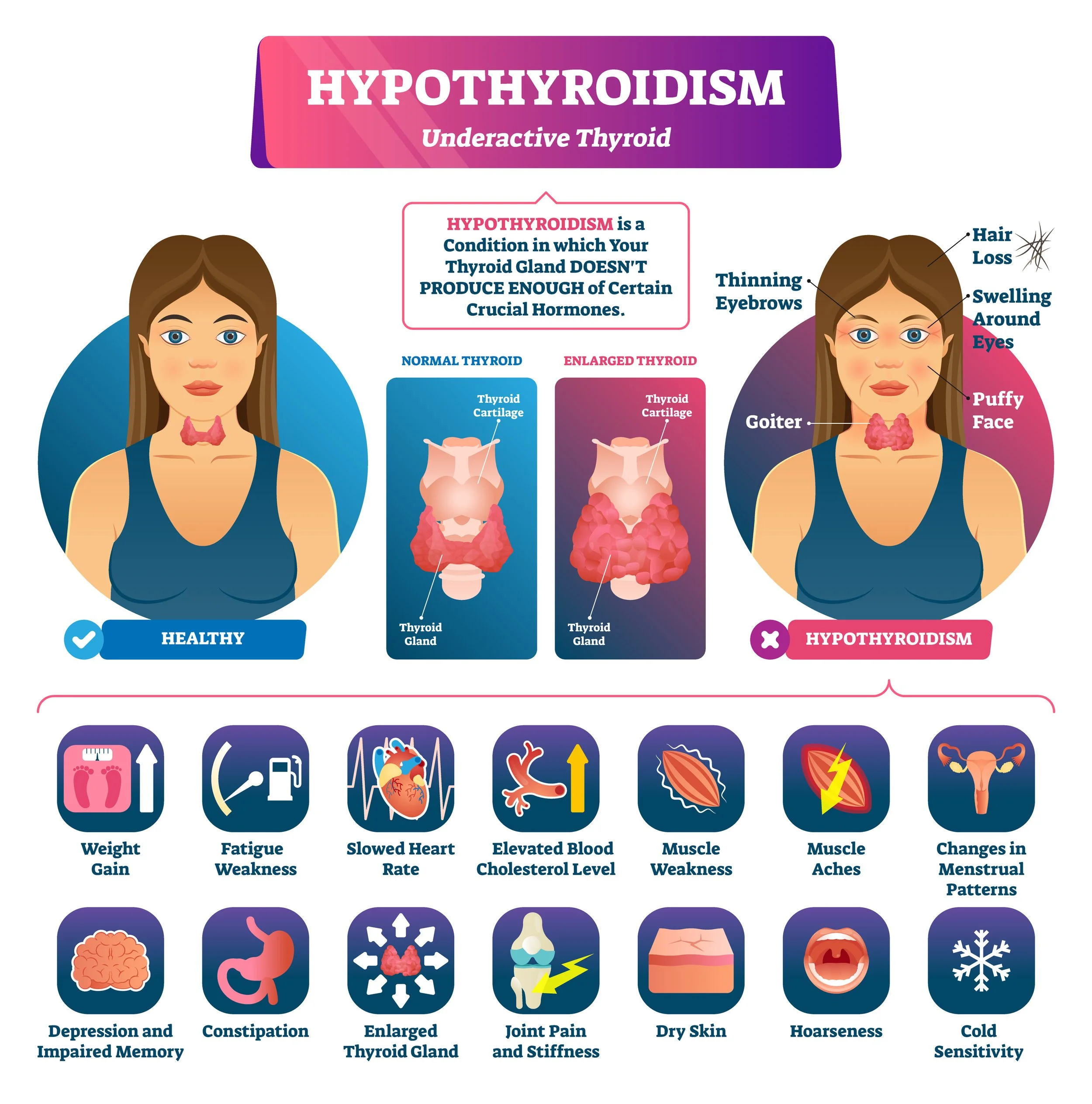
Are you constantly cold, exhausted, constipated, struggling with weight gain, or waking up feeling like you never slept? Maybe your hair is thinning, your mood has changed, or you've lost the energy you used to have. You've had your thyroid tested, but your doctor says everything looks normal.
I see this pattern frequently in my nutrition practice, especially among people who have spent years dieting, restricting carbohydrates, exercising excessively, or struggling with digestive problems. They may be eating what they've been told is a healthy diet, yet their bodies are showing signs of reduced energy production.
Your thyroid hormones help regulate how quickly your cells use energy. They influence body temperature, digestion, heart rate, cholesterol metabolism, reproductive function, and the ability to maintain a healthy body composition. When thyroid hormone production or activity declines, many of these processes can slow down together.
Sometimes the problem begins in the thyroid gland itself. Other times, the body is responding to insufficient energy availability by reducing thyroid hormone activity. Understanding the difference is one of the most important steps toward restoring metabolic health.
Understanding TSH, T4, T3, and Reverse T3
The thyroid system begins in the brain. The hypothalamus communicates with the pituitary gland, which releases thyroid-stimulating hormone (TSH). TSH signals the thyroid gland to produce and release thyroid hormones, primarily T4 and smaller amounts of T3.
T4 is often described as a storage or prohormone because much of its activity depends on conversion into T3. T3 is the more biologically active thyroid hormone and helps regulate the expression of genes involved in energy metabolism, mitochondrial function, and heat production.
Much of this conversion happens outside the thyroid gland, including in the liver, kidneys, and other tissues. Specialized enzymes called deiodinases determine how thyroid hormones are activated or inactivated. Their activity can change in response to nutrition, illness, inflammation, and other physiological conditions.
Reverse T3, or rT3, is an inactive form of thyroid hormone produced from T4. Unlike T3, it does not activate thyroid hormone receptors in the usual way. During fasting, significant energy restriction, and some illnesses, circulating T3 often decreases while reverse T3 increases.
Why does this matter? Because the body may be shifting away from producing and maintaining active T3 during periods of insufficient energy. Elevated reverse T3 can be one sign of that adaptation, although it does not itself prove that reverse T3 is blocking T3 or causing hypothyroidism. The larger concern is the accompanying reduction in active thyroid hormone availability.
Primary Hypothyroidism Versus Metabolic Thyroid Suppression
Primary hypothyroidism occurs when the thyroid gland cannot produce enough hormone. Hashimoto's thyroiditis is a common cause, but iodine deficiency, thyroid damage, surgery, and certain medications can also interfere with hormone production. In overt primary hypothyroidism, TSH is generally elevated and free T4 is low.
There is another pattern I believe deserves far more attention: reduced thyroid hormone activity associated with insufficient fuel. When calorie intake is chronically inadequate, carbohydrate availability is low, or the body is experiencing significant physiological stress, it may reduce T3 production and alter thyroid hormone metabolism.
This is sometimes described as low-T3 syndrome, adaptive thyroid suppression, or metabolic thyroid downregulation. The term functional hypothyroidism is also used in integrative practice, although it does not have one universally accepted medical definition. These patterns should not automatically be treated as identical to primary hypothyroidism.
The important point is that the thyroid system responds to the body's nutritional environment. In some people, improving energy availability can help normalize thyroid hormone patterns without requiring lifelong medication. Others have genuine thyroid gland disease and need ongoing hormone replacement, even after their nutrition and metabolic health improve.
Why Carbohydrates Matter for Thyroid Function
Carbohydrates do much more than provide calories. They help maintain blood glucose and liver glycogen, support physical activity, and influence the hormonal environment in which thyroid conversion takes place.
One particularly interesting study was published by Spaulding and colleagues in 1976. During severe calorie restriction, participants consuming no carbohydrates experienced a substantial decline in T3. When the same calorie-restricted diets contained at least 50 grams of carbohydrate, the researchers did not observe the same significant decline in T3.
Other research has also found that fasting and carbohydrate restriction can influence T3 and reverse T3, although the response depends on the severity of energy restriction, duration, and individual physiology.
This is one reason I question the widespread recommendation to eliminate carbohydrates for weight loss, particularly in people who are already cold, fatigued, constipated, or struggling with thyroid-related symptoms. Restricting carbohydrates may produce short-term weight loss while also changing the hormonal signals involved in energy expenditure.
My preferred carbohydrate sources include ripe fruit, fruit juice, honey, potatoes, sweet potatoes, sourdough bread, masa, and milk. These foods provide accessible energy, and many contribute valuable vitamins, minerals, and other nutrients. The goal is not simply to eat more sugar, but to provide adequate energy within a nutrient-dense diet that supports the body's metabolic needs.
Anne Loucks and the Science of Energy Availability
One of the most important researchers in this field is Anne Loucks, whose work helped establish the concept of energy availability.
Energy availability describes how much dietary energy remains available to support the body's normal functions after accounting for the energy used during exercise. It is calculated relative to kilograms of lean body mass, also called fat-free mass.
In controlled studies, Loucks and colleagues demonstrated that reducing energy availability could alter thyroid hormones and reproductive signaling within just a few days. In one study, low energy availability reduced T3 and free T3 while increasing reverse T3. Increasing dietary intake prevented those changes despite continued exercise.
Her research also demonstrated that inadequate energy availability can disrupt luteinizing hormone pulsatility, an important part of reproductive function. This helps explain why chronic underfueling can affect menstrual cycles, fertility, thyroid physiology, and overall metabolic health.
In my practice, I frequently use approximately 43–48 calories per kilogram of lean body mass as an individualized starting framework for nutritional recovery, adjusting for exercise, body composition, symptoms, and progress. This is my clinical approach rather than a treatment threshold established by Loucks. Her research provides important evidence that insufficient energy availability can disrupt endocrine function, but it does not establish one universal calorie prescription for every person.
Body Temperature and Pulse: The Broda Barnes and Ray Peat Approach
Long before modern thyroid testing became routine, physician Broda Barnes emphasized the importance of body temperature when evaluating suspected hypothyroidism. He believed that a consistently low waking temperature, considered alongside symptoms, could provide useful information about metabolic function.
Ray Peat expanded on this approach by looking at both temperature and pulse throughout the day. He emphasized that body temperature alone can be influenced by environmental conditions and stress hormones, while pulse provides another clue about the body's physiological state.
In my practice, I often look for a waking temperature around 97.8°F, a daytime temperature approaching 98.6°F, and a comfortable resting pulse around 75–85 beats per minute. These are practical monitoring targets drawn from the Barnes and Peat framework, not universally validated diagnostic cutoffs.
I also pay attention to what happens after breakfast. If someone's temperature consistently falls after eating, it may be worth investigating whether overnight stress responses, inadequate fueling, or other physiological factors are influencing their temperature pattern.
Temperature and pulse are not substitutes for laboratory testing. Illness, medications, fitness, hormones, and environmental temperature can all affect these measurements. However, following consistent patterns alongside symptoms and thyroid labs can provide useful context when evaluating changes in energy availability and metabolic function.
Why Thyroid Medication Sometimes Helps—and Why Nutrition Still Matters
For people with confirmed hypothyroidism, thyroid hormone replacement can be essential. Levothyroxine, which provides T4, is the standard first-line treatment and works well for many patients.
Natural desiccated thyroid, or NDT, contains both T4 and T3. Some patients report feeling better on preparations containing T3, particularly when symptoms persist despite treatment with T4 alone. Research into combination treatment has produced mixed results, but patient preference and individual response remain important areas of investigation.
I believe the discussion should include the possibility that some people may benefit from carefully supervised T3-containing treatment. In selected cases, clinicians may consider combination T4/T3 therapy, particularly when persistent symptoms warrant further evaluation. Because T3 acts more rapidly than T4, dosing schedules and amounts require particular care to avoid excessive thyroid hormone exposure.
I also believe we need to address the nutritional conditions that may be contributing to reduced thyroid hormone activity. If someone has been chronically underfueling, restoring adequate calories, carbohydrates, and nutrients may help reverse an adaptive low-T3 pattern.
In these functional or adaptive cases, thyroid medication may sometimes be used as temporary support under medical supervision, with treatment reassessed as nutritional status improves. This is different from permanent primary hypothyroidism, where ongoing replacement may be necessary. Thyroid medication should never be tapered or discontinued solely because temperatures improve or symptoms change.
Dietary Fat, Traditional Diets, and Thyroid Metabolism
The amount and type of fat in the diet also deserve attention. Modern American diets obtain approximately 37% of calories from fat, while some traditional agricultural populations consumed substantially less.
There is considerable variation among traditional diets, so it would be inaccurate to suggest that every ancestral population ate very little fat. Nevertheless, the existence of successful carbohydrate-rich, lower-fat dietary patterns challenges the idea that large amounts of dietary fat are necessary for metabolic health.
My approach emphasizes reducing industrial seed oils and limiting excessive dietary fat while providing enough carbohydrates to support energy production. Polyunsaturated fats are susceptible to oxidation, and the relationship between fatty acid metabolism, oxidative stress, and thyroid physiology is an important area of research. The degree to which ordinary dietary PUFA intake directly suppresses human thyroid function remains less certain.
The Inuit provide an interesting historical comparison because traditional Arctic diets could be relatively high in animal foods and fat. Research also documents pronounced seasonal birth patterns in some Inuit populations. A study of Labrador Inuit records from 1778 through 1940 found substantial seasonal variation in births, and other research has examined the influence of environmental and social conditions on these patterns.
Traditional consumption of nutrient-rich animal organs, including possible thyroid tissue, raises interesting questions about the role of micronutrients and naturally occurring thyroid hormones. However, the available birth-record studies do not establish that seasonal consumption of thyroid glands caused the observed fertility patterns. The broader lesson is that traditional diets must be understood in their full nutritional and environmental context rather than reduced to a single macronutrient.
Thyroid Function and Weight-Loss Resistance
One of the most frustrating experiences I see is someone eating less and less while finding it increasingly difficult to lose body fat. Often, they have already spent years following restrictive diets, exercising heavily, or avoiding carbohydrates because they were told these were necessary for weight management.
The body adapts to prolonged energy restriction. Resting energy expenditure can decrease, spontaneous movement may decline, and changes in thyroid hormones and other metabolic signals can contribute to lower total energy expenditure. These adaptations can make continued weight loss more difficult.
This doesn't mean that fat loss is impossible when thyroid function is low, or that everyone with weight-loss resistance has hypothyroidism. It means that continuing to cut calories may not address the physiological conditions contributing to the problem.
My approach begins by improving nutritional adequacy, carbohydrate availability, digestion, and metabolic stability. Once someone is eating enough and showing signs of improved function, we can consider a more structured approach to body-fat reduction that includes adequate recovery periods rather than continuous restriction.
I generally base protein and fat recommendations on lean body mass and individual tolerance. For many clients, this means moderate protein, relatively low dietary fat, and a carbohydrate-rich diet that supplies most of their energy. The exact amounts depend on their body composition, activity level, medical history, and metabolic response.
Nutrients, Digestion, and the Bigger Thyroid Picture
Thyroid health is not just about carbohydrates. Iodine and iron are necessary for thyroid hormone synthesis, while selenium is involved in enzymes that regulate thyroid hormone metabolism. Zinc and other nutrients also contribute to normal endocrine and metabolic function.
Digestive problems can complicate the picture. Chronic constipation, poor dietary variety, inadequate intake, and certain gastrointestinal disorders can make it more difficult to maintain nutritional adequacy. In some cases, hypothyroidism itself contributes to slower gastrointestinal motility, creating a cycle of digestive symptoms and reduced food tolerance.
This is why I look at the whole person rather than focusing on one thyroid marker. Food intake, nutrient status, digestion, sleep, exercise, medications, symptoms, and laboratory results all help explain why someone may be struggling.
Restoring metabolic health often requires addressing several of these factors together. Simply adding thyroid hormone without correcting inadequate nutrition may leave important problems unresolved.
Restoring Metabolism Starts With Providing Enough Energy
Your thyroid is part of a larger system that responds continuously to the availability of energy. When food intake is insufficient, the body can change how it produces and uses thyroid hormones, conserve energy, and reduce functions that are less essential for immediate survival.
This is why I place so much emphasis on adequate calories, carbohydrate-rich foods, nutrient density, and recovery from chronic dieting. For people experiencing adaptive thyroid suppression, restoring adequate energy availability may be a major part of improving thyroid hormone metabolism and overall health.
Primary hypothyroidism still requires appropriate medical evaluation and, often, ongoing treatment. But when reduced T3 is part of a broader response to underfueling, the nutritional environment deserves just as much attention as the laboratory numbers.
The goal is to help the body regain the resources it needs to produce energy, maintain normal physiological function, and support a healthier relationship with food and body composition.
References
Spaulding SW, Chopra IJ, Sherwin RS, Lyall SS. Effect of caloric restriction and dietary composition on serum T3 and reverse T3 in man. Journal of Clinical Endocrinology & Metabolism. 1976;42(1):197–200. PMID: 1249190.
Loucks AB, Callister R. Induction and prevention of low-T3 syndrome in exercising women. American Journal of Physiology. 1993;264–R930. PMID: 8498602.
Loucks AB, Heath EM. Induction of low-T3 syndrome in exercising women occurs at a threshold of energy availability. American Journal of Physiology. 1994;266–R823. PMID: 8160876.
Loucks AB, Verdun M, Heath EM. Low energy availability, not stress of exercise, alters LH pulsatility in exercising women. Journal of Applied Physiology. 1998;84:37–46.
Loucks AB, Thuma JR. Luteinizing hormone pulsatility is disrupted at a threshold of energy availability in regularly menstruating women. Journal of Clinical Endocrinology & Metabolism. 2003. PMID: 12519869.
Serog P, et al. Effects of slimming and composition of diets on oxygen consumption and thyroid hormones in healthy subjects. American Journal of Clinical Nutrition. 1982;35:24–35. PMID: 7064875.
Ehrenkranz JRL. Seasonal breeding in humans: birth records of the Labrador Eskimo. Fertility and Sterility. 1983;40:485–489. PMID: 6617909.
Condon RG. Inuit natality rhythms in the central Canadian Arctic. Journal of Biosocial Science. 1982;14:167–177. PMID: 7076694.
Barnes BO. Hypothyroidism: The Unsuspected Illness. Harper & Row; 1976.
Peat R. Writings and interviews on thyroid physiology, temperature, pulse, and energy metabolism.
