

How to Track Like a Pro with Cronometer

A Step-by-Step Guide to Hitting Your Macros and Mastering Metabolism
If you're ready to take your nutrition seriously—whether it's for fat loss, metabolic repair, gut healing, or finally getting your energy back—mastering Cronometer is non-negotiable. 🚀 This is the difference between hoping something works and knowing it is.
You don’t need perfection on day one, but you do need a clean setup and a clear structure. Most people fail here—not because they lack discipline, but because they never actually define the target they’re trying to hit.
Set your targets first
Before you track anything, you need a clear destination. That means setting your calories and macros with intention—not guessing, not letting the app decide for you.
Start with calories.
Use your current weight, estimated body fat percentage, and goals to determine your energy target. For many people, especially those coming out of restriction or dealing with metabolic issues, the goal is to build toward adequate energy availability. A common baseline is working toward 45 kcal per kilogram of lean body mass. That’s where your body actually starts feeling safe again—hormones stabilize, digestion improves, and fat loss becomes possible instead of forced.
Then set your macros.
Protein should be anchored to lean body mass, not total weight. A solid range is 1.8–2.6 g per kg of LBM, which for most people lands around 80–100 grams for women and ~120 grams for men, primarily from animal sources for better amino acid balance and absorption.
Fat should be controlled and intentional, not something that creeps up. Aim for 0.3–0.8 g per kg of LBM, going lower if fat loss or gut healing is the priority, and higher only if needed for satiety or specific phases.
Carbohydrates fill in the rest of your calories. This is where most people need to push past their comfort zone—especially if they’ve been under-eating or coming from low-carb. Carbs are what support thyroid function, lower stress hormones, and actually allow your metabolism to run.
Set up Cronometer correctly
Now go into the app and actually lock this in.
Go to More → Targets & Profile
From there:
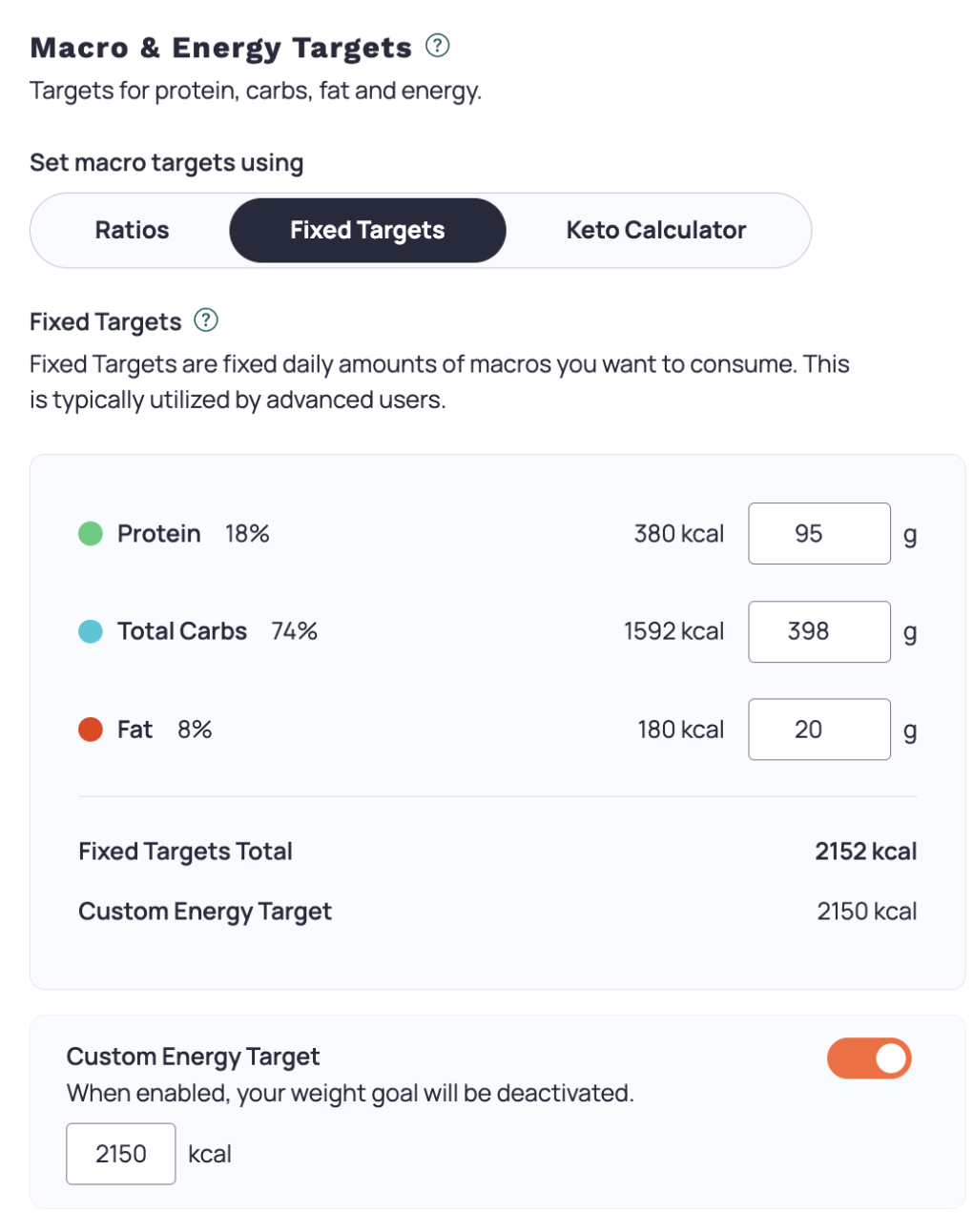
Turn on Custom Energy Target and enter your calories
Switch to Fixed Targets (not ratios)
Choose Custom and enter your macros in grams
This prevents the app from constantly adjusting things behind the scenes and keeps your targets stable.
Structure your day
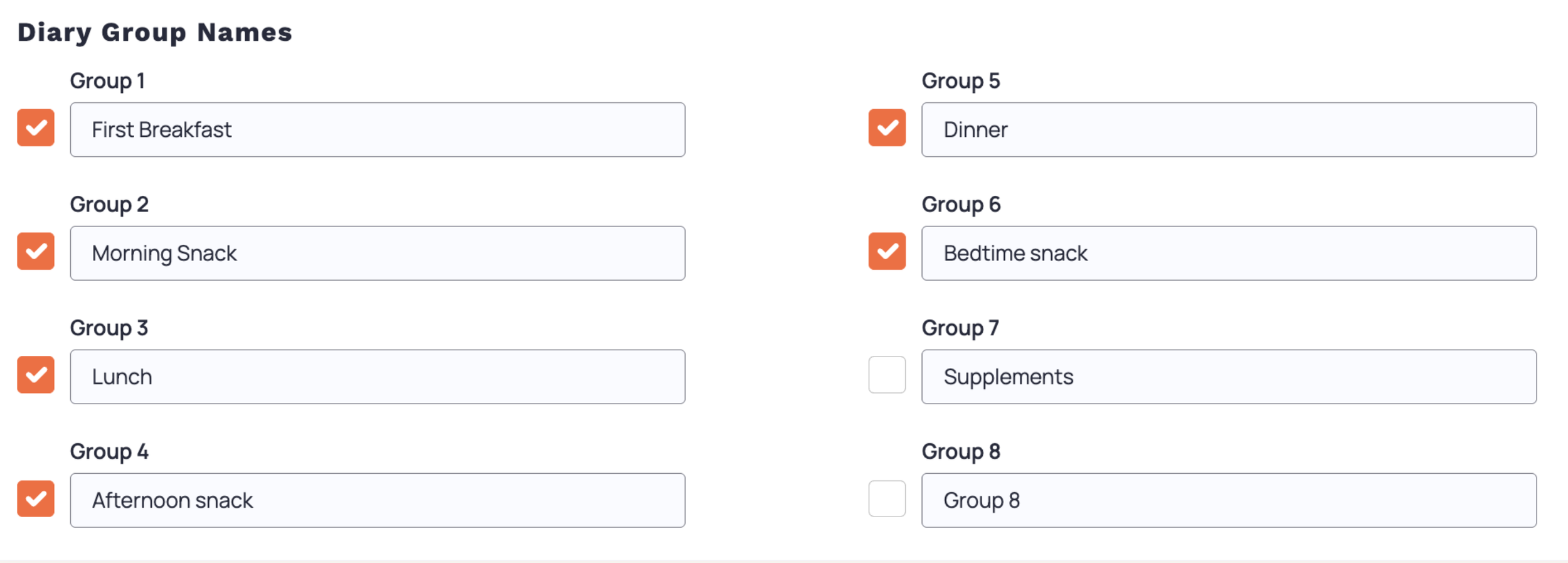
Next, go to More → Display Settings and scroll down to create your meal groups.
Set up six eating windows:
First breakfast
Morning snack
Lunch
Afternoon snack
Dinner
Bedtime snack
Optionally, add a 7th category for supplements or middle-of-the-night snacks if sleep is an issue.
This isn’t just for organization—it changes your physiology. Spreading intake across the day helps stabilize blood sugar, reduce stress hormones, and improve digestion. It also makes it dramatically easier to actually hit your macros without cramming everything into dinner.
Build your go-to meals
This is where tracking becomes sustainable.
Instead of reinventing the wheel every day, create your staple meals inside the app:
Go to Foods → Custom Recipes
Input your regular meals (smoothies, bowls, snacks, etc.)
Weigh and measure once, then reuse
Include everything—milk in your coffee, honey in yogurt, butter on potatoes. The more accurate your base meals are, the less mental effort this takes long-term.
You’re building a system, not just logging food.
Track meals strategically
Timing and distribution matter more than people think.
Early in the day, focus on building momentum. By lunch or your afternoon snack, you should already be well into your protein and carb targets.
Aim to hit ~70% of protein and carbs by afternoon
Save a portion of your fat for dinner and bedtime
Use Cronometer intentionally.
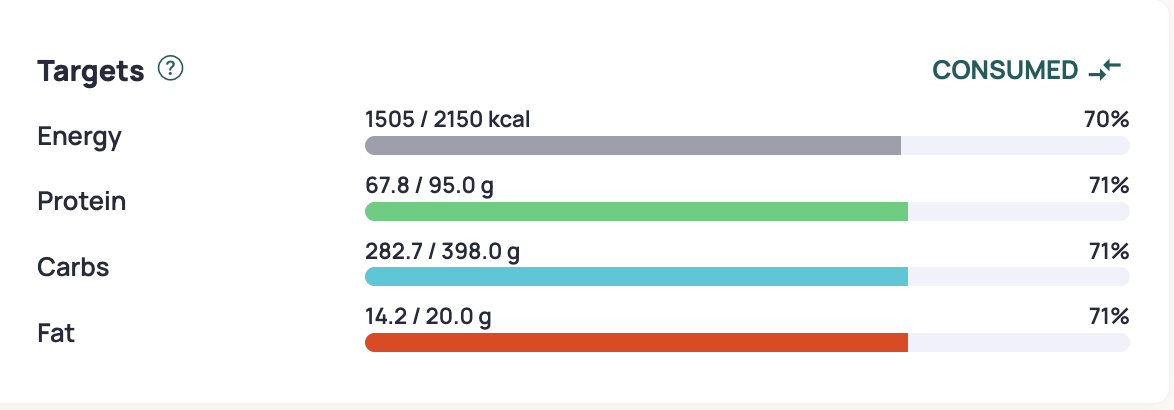
Throughout the day, use the “Consumed” toggle on the main page so your macros display as percentages. This gives you a real-time sense of how you’re building your day. Since 100 divided by 6 meals is about 17%, that becomes your rough guide—each mini meal should move your carbs (and ideally protein early on) up by about that amount.
In the beginning, it’s helpful to keep protein tracking alongside carbs to stabilize blood sugar and avoid big swings. A simple rhythm to aim for is high teens after your first meal, mid-30s after your morning snack, around the 50s after lunch, and closing in on 70% by your afternoon snack—especially for carbohydrates.
Protein can lag slightly later in the day, and fat can stay lower during the day if you’re saving some for dinner. That’s intentional.
The most important check-in is in the afternoon. This is where you assess whether you’ve overshot or fallen behind on any macros. At that point, switch the toggle from “Consumed” to “Remaining”, which shows you exactly how many grams of each macro you have left for the day.
From there, you can plan with precision. A lot of times it helps to pre-plan your bedtime snack first, so you know exactly what needs to be allocated to dinner. This is one of the most reliable ways to consistently land at 100% for calories and macros by the end of the day.
Hit your macros with precision
This is where most people get sloppy—and where results fall apart.
The goal is not “close enough.” The goal is tight consistency.
Aim for 99–101% of calories and each macro
If calories and macros don’t match, it’s usually a bad database entry—fix the food, not your plan
If you have leftover calories at the end of the day, assume they come from carbs, not protein or fat
Small misses, repeated daily, are what stall progress.
Nighttime check-in: finish strong
Dinner is where you bring it home—not where you start guessing.
Before you eat, check your numbers. Know exactly what’s left, and build your meal accordingly.
Dinner and your bedtime snack are where everything comes together. Build them intentionally, not reactively. A simple combination of carbs + protein + salt (like milk, honey, and a pinch of salt) can stabilize blood sugar overnight, lower cortisol, and significantly improve sleep quality.
This is where a lot of recovery actually happens.
Final priorities
At the end of the day, this comes down to a few non-negotiables:
Hit your calorie target — under-eating adds up fast and slows everything down
Hit each macro within ~1% — this is what drives hormonal balance and recovery
Stay consistent — the body responds to patterns, not one perfect day
Done right, this stops feeling tedious and starts feeling powerful. You’re no longer guessing—you’re directing.
Stay consistent. Stay precise. And watch how quickly your metabolism starts responding.
